Monday, October 26, 2015

26/10/2015: INVE Aquaculture gathers over 1 billion fry in Crete

http://www.inveaquaculture.com/

On October 14 & 15, INVE Aquaculture held the 2015 edition of its European Customer Seminar. The goal of the seminar was to gather the top marine fish hatcheries in one significant place, and it seems they were able to do just that. With close to 100 participants representing 54 top hatcheries from Norway over France, Spain, Italy, Greece, Turkey, Egypt, all the way to the United Arab Emirates, INVE Aquaculture managed to gather a total fry production of 1.05 billion fry in the theatre of the Hellenic Centre of Marine Research (HCMR) in Crete, Greece. This venue was chosen because of the two organisations’ recent research partnership that is currently being conducted at the facilities. It gave INVE Aquaculture the possibility to explain the goal but also the purpose of its new Total Quality approach – which is aimed at showing all stakeholders the importance of quality across the board.

After Alessandro Moretti, Product Manager Fish Hatcheries, started off by giving an overview of the general marine fish market in Europe, the stage was set for the guest speakers. Notable speakers included Dr Nikos Papandroulakis and Dr Mylonas Constantinos – both highly ranked researchers at HCMR who respectively talked about their latest findings in hatchery technologies and broodstock management. Also speaking was Dr Katerina Moutou who is associated professor and spoke about nutritional needs as well as about innovative tools for improving larval quality – eg by focusing on digestibility.
     
Prof Dr George Koumoundouros concluded the first day by touching on a very specific for the audience: the importance of juvenile quality in Mediterranean hatcheries. A new vision on fish development came from Prof Dr Dominique Adriaens. Adriaens, a biology professor at Ghent University (BE), theorised on the possible influences of biology on aquaculture and the importance of evaluating other parameters when it comes to fry quality – something that had never been done before during an aquaculture seminar. Concluding the seminar was John Stefanis (former CEO of Selonda) who, like INVE Aquaculture, is a true pioneer in Mediterranean aquaculture. He emphasised on the importance of growing the industry and working in both a controlled and professional way.

The speakers concluded that fry quality is related to many parameters that should be measurable and manageable in order to improve the performance of the animals in the subsequent stages. All of them were able to get a significant response from the audience, which realised INVE Aquaculture’s second goal of the gathering: to create a platform of interaction amongst the industry leaders.

About INVE Aquaculture:
Stimulating growth in aquaculture has been the goal of INVE Aquaculture ever since its foundation in 1983. Healthy growth of marine and freshwater species, steady growth of local aquaculture businesses and sustainable growth of the industry as a whole. This is why INVE specialise in innovative feed and feed additive products for fish & shrimp hatcheries, farms, feed mills and other aquaculture related businesses. By developing best practices for balanced nutrition, thorough health risk prevention and optimal microbial management throughout the breeding lifecycle, INVE support their clients’ long-term economical and ecological viability with new concepts and technologies that improve their bottom line.


http://www.inveaquaculture.com/

Visit the INVE site HERE.

The Aquaculturists
This blog is maintained by The Aquaculturists staff and is supported by the
magazine International Aquafeed which is published by
Perendale Publishers Ltd

For additional daily news from aquaculture around the world: aquaculture-news

Friday, October 23, 2015

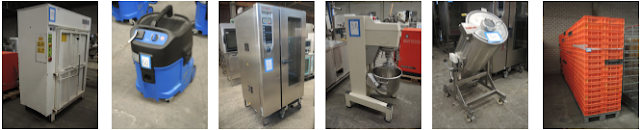
23/10/2015: Latest online auctions

https://www.industrial-auctions.com/auctions/145-online-auction-machinery-and-inventory-on-former-location-vion-food-group-in-wunstorf-de
https://www.industrial-auctions.com/auctions/137-online-auction-food-processing-machinery-bakery-and-catering-equipment-in-oirschot-nl

27th of October: Online auction food processing machinery, bakery and catering equipment in Oirschot (NL)

Viewing day
26th of October
From 9:00 till 17:00h
Address:
De Stad 10
5688 NX Oirschot (NL)


https://www.industrial-auctions.com/auctions/138-online-auction-machinery-and-inventory-former-meat-processor-deli-pack-in-boxtel-nl

3rd of November: Online auction machinery for the vegetable, fruit and meat processing industry due to ending activities Deli-Pack in Boxtel (NL)
 
Viewing day
29th of October
From 9:00 till 16:00h
Address:
Schouwrooij 26
5281 RE Boxtel (NL)
      
https://www.industrial-auctions.com/auctions/141-online-auction-machinery-for-the-complete-food-industry-in-memmingerberg-de

5th of November: Online auction machinery for the complete food industry in Memmingerberg (DE)

Viewing day
4th of November
From 9:00 till 13:00h
Address:
Gewerbegebiet 1
87766 Memmingerberg (DE)
     
https://www.industrial-auctions.com/auctions/140-online-auction-fish-processing-machinery-due-to-reorganization-various-companies-in-ede-nl

11th of November: Online auction fish processing machinery due to reorganisation various companies in Ede (NL)

Viewing day
9th of November
From 9:00 till 15:00h
Address:
Marconistraat 17
6716 AK Ede (NL)
     
https://www.industrial-auctions.com/auctions/143-online-auction-packiging-machinery-and-other-equipment-for-the-food-and-non-food-industry-in-weert-nl

19th of November: Online auction packaging machinery and other equipment for the food and non-food industry in Weert (NL)
 
Viewing day
17th of November
From 9:00 till 13:00h
Address:
St. Luciastraat 50-52
6002 BP Weert (NL)


https://www.industrial-auctions.com/auctions/145-online-auction-machinery-and-inventory-on-former-location-vion-food-group-in-wunstorf-de

26th of November: Online auction machinery and inventory on former location Vion Food Group in Wunstorf (DE) 
Viewing days
23 November: 12:00-17:00h
24 November: 9:00-15:00h
Address:
Bahnhofstrasse 63
31515 Wunstorf (DE)
 

The Aquaculturists
This blog is maintained by The Aquaculturists staff and is supported by the
magazine International Aquafeed which is published by
Perendale Publishers Ltd

For additional daily news from aquaculture around the world: aquaculture-news

23/10/2015: Seafood waste reduction sought - Researchers say waste adds to other problems threatening global seafood resources

http://issuu.com/international_aquafeed/docs/iaf1505_w1/8
by Roy Palmer, director, Aquaculture without Frontiers

First published in International Aquafeed, September-October 2015  


It is claimed that as much as 47 percent of the edible US seafood supply is lost each year, mainly from consumer waste, according to latest research from the Johns Hopkins Centre for a Liveable Future (CLF).

The findings, to be published in the November issue of Global Environmental Change, come as food waste in general has been in the spotlight and concerns have been raised about the sustainability of the world’s seafood resources.

In the US and around the world, people are being advised to eat more seafood to improve their health and wellbeing, however overfishing, climate change, pollution, habitat destruction and the use of fish for other purposes besides human consumption are potentially threatening supply.

“If we’re told to eat significantly more seafood but the supply is severely threatened, it is critical and urgent to reduce waste of seafood,” says study leader David Love, PhD, a researcher with the Public Health and Sustainable Aquaculture project at the CLF and an assistant scientist at the Johns Hopkins Bloomberg School of Public Health.

The new study analysed the food waste issue by focusing on the amount of seafood lost annually at each stage of the food supply chain and at the consumer level. Data was compiled from many sources and from that, the researchers estimated the US edible seafood supply at approximately 2.132 billion kg (4.7 billion pounds) per year, which includes domestic and imported products minus any exported products.

Some of the edible seafood supply is wasted as it moves through the supply chain from harvest to plate. They found that the amount wasted each year is roughly 1.04 billion kg (2.3 billion pounds). Of that waste, they say that 150 million kg (330 million pounds) are lost in distribution and retail, 260 million kg (573 million pounds) are lost when commercial fishers catch the wrong species of fish and then discard it (a concept called by-catch) and a staggering 590 million kg (1.3 billion pounds) are lost at the consumer level.

The researchers discovered the greatest portion of seafood loss occurred at the level of consumers (51 to 63 percent of waste). Whilst 16 to 32 percent of waste is due to by-catch and 13 to 16 percent is lost in distribution and retail operations.

To illustrate the magnitude of the loss, the authors estimate this lost seafood could contain enough protein to fulfill the annual requirements for as many as 10 million men or 12 million women; and there is enough seafood lost to close 36 percent of the gap between current seafood consumption and the levels recommended by the 2010 US Dietary Guidelines.
     
http://issuu.com/international_aquafeed/docs/iaf1505_w1/8
Image: Jac Culler
The 2010 US Dietary Guidelines recommended increasing seafood consumption to 230g (eight ounces) per person per week and consuming a variety of seafood in place of some meat and poultry. Achieving those levels of demand would require doubling the US seafood supply, the researchers say.

Waste reduction has the potential to support increased seafood consumption without further stressing aquatic resources, says Roni Neff, PhD, director of the Food System Sustainability and Public Health Program at CLF and an assistant professor with the Bloomberg School of Public Health.

She says that while a portion of the loss could be recovered for human consumption, “we do not intend to suggest that all of it could or should become food for humans.

“It would generally be preferable for the fish that becomes by-catch to be left alive in the water rather than eaten, and due to seafood’s short shelf life, it may be particularly challenging compared to other food items to get the remaining seafood eaten or frozen before it decays,” she says.

In the report the researchers offer several approaches to reduce seafood waste along the food chain from catch to consumer. Suggestions range from limiting the percent of by-catch that can be caught at the production level to packaging seafood into smaller portion sizes at the processing level to encouraging consumer purchases of frozen seafood.

Some loss is unavoidable, but the researchers hope these estimates and suggestions will help stimulate dialogue about the significance and magnitude of seafood loss.

Note: “Wasted seafood in the United States: Quantifying loss from production to consumption and moving toward solutions” written by Dave C. Love, Jillian P. Fry, Michael C. Milli and Roni A. Neff is available at: http:// bit.ly/1iJdMFc      


Read the magazine HERE.

The Aquaculturists
This blog is maintained by The Aquaculturists staff and is supported by the
magazine International Aquafeed which is published by
Perendale Publishers Ltd

For additional daily news from aquaculture around the world: aquaculture-news